Know Before You Go
Travel Guide
Practical advice, destination highlights, and cultural tips from people who live and work here.
Essentials
Good to know
Best time to visit
October to March is ideal — cooler temperatures (20–30°C in the desert). Summer (June–September) can reach 45°C+ and is not recommended for desert travel.
What to pack
Light, loose, long-sleeved clothing (sun + cultural respect), a warm layer for cold desert nights, sturdy sandals or closed shoes, high-SPF sunscreen, lip balm, and a headscarf.
Group size
Our tours run with a maximum of 12 travelers, keeping the experience intimate and the logistical footprint small. Private tours for 1–3 people are also available.
Duration
We recommend a minimum of 7 days to cover the key highlights. A 14-day Grand Discovery allows a much deeper experience including more remote areas.
Regions covered
Nouakchott → Adrar Plateau (Terjit, Chinguetti, Ouadane) → Choum (Iron Train boarding) → Nouadhibou. Most of our classic routes follow this north-west circuit.
Temperature
Desert days in November average 28–33°C. Nights drop to 10–15°C — bring a fleece or light jacket. The coast (Nouakchott, Nouadhibou) stays milder year-round.
Classic Route
The 7-Day Circuit
Our most popular route covering Mauritania's greatest hits — from the Atlantic coast to the deep Sahara and back.
Day 1
Nouakchott Arrival
Airport pickup, hotel check-in, explore the camel market, museum, and fishing port. Sunset tea on the beach.
Day 2
Azoueiga Valley
Drive to the tallest sand dunes in Mauritania. Afternoon sandboarding and dune walks. Overnight camping under the stars.
Day 3
Terjit → Chinguetti
Morning at Terjit oasis — swim in the natural springs. Afternoon: arrive Chinguetti, camel ride and library visits.
Day 4
Ouadane & Eye of the Sahara
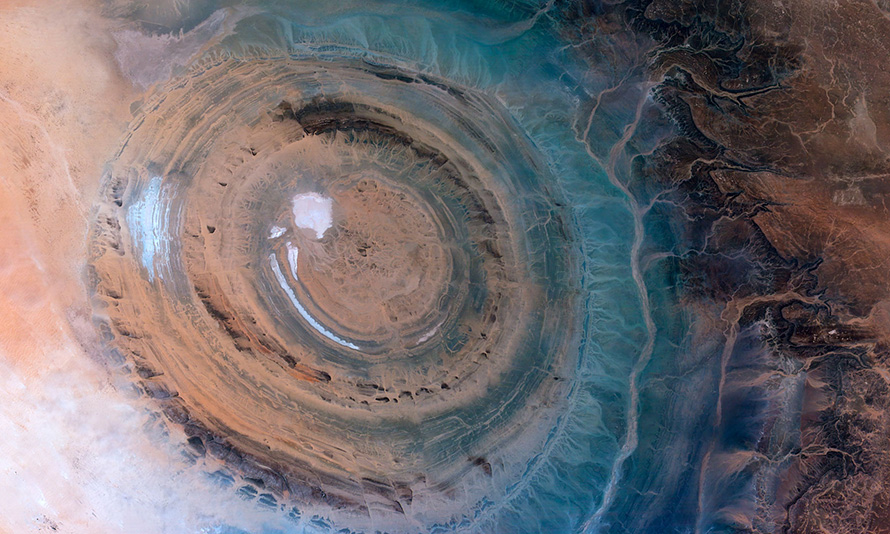
Drive to the ancient city of Ouadane. Explore the ruins and visit the Richat Structure — the Eye of the Sahara.
Day 5
Atar → Choum (Iron Train)
Lunch in Atar, then drive to Choum. Board the Iron Ore Train for an overnight journey across the desert to Nouadhibou.
Day 6
Nouadhibou & Cap Blanc
Arrive in Nouadhibou. Rest, explore the city, visit Cap Blanc National Park — flamingos, monk seals, Atlantic views.
Day 7
Return to Nouakchott
Drive south along the coast where dunes meet the Atlantic. Farewell beach tea. Airport transfer by evening.
Where You'll Go
Key Destinations
Nouakchott
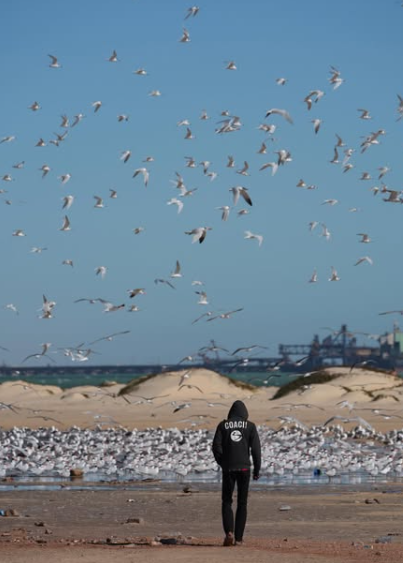
Start your journey in the capital. Visit the second-largest camel market in Africa, the National Museum, the Atlantic fishing village, and catch sunset over the beach where the dunes meet the ocean.
Azoueiga Valley
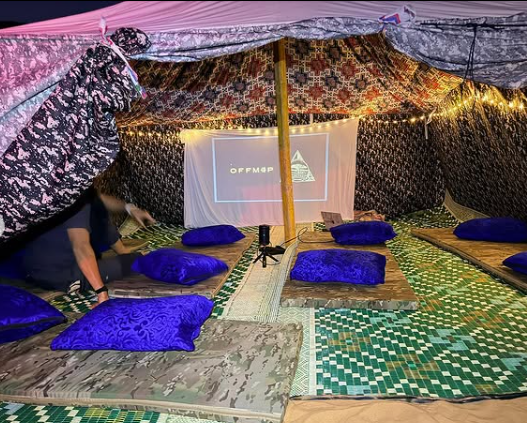
Home to the tallest sand dunes in Mauritania. Camp overnight beneath a sky unpolluted by any city light — some of the best stargazing on Earth happens here.
Terjit Oasis
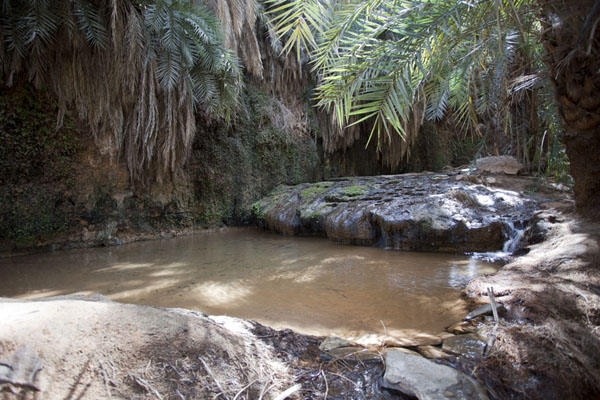
A hidden palm oasis carved into canyon walls — cool water springs fed by underground aquifers flowing through the Sahara. One of the most unexpected and beautiful spots in West Africa.
Chinguetti
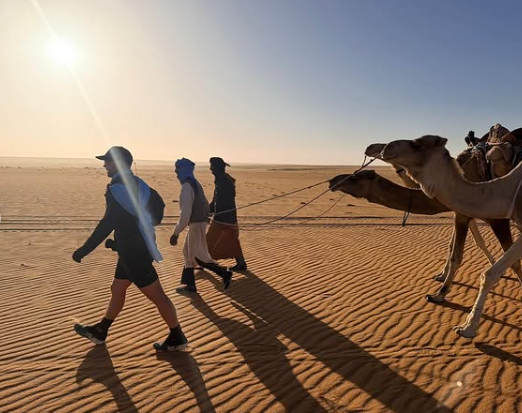
The seventh holiest city of Islam and a UNESCO World Heritage site. Medieval libraries house thousands of Islamic manuscripts dating back to the 13th century. Ride a camel through the ancient streets.
Ouadane & Eye of the Sahara
Another UNESCO ancient city perched on the edge of the desert. Nearby is the Richat Structure — the Eye of the Sahara — a 50-km geological bull's-eye visible from space.
Nouadhibou & Cap Blanc
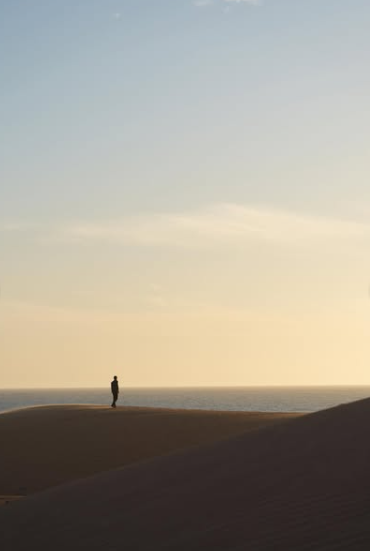
The industrial port city at the end of the Iron Train line. Explore Cap Blanc National Park, one of the last habitats of the Mediterranean monk seal, with flamingos and diverse birdlife.
All Our Tours Include
Everything handled for you
Our trips are exclusive and flexible — we do not prescribe any sights but make suggestions based on experience. If you want to see additional or alternative places, discuss it with your guide and we will take you there.
Ready to plan your trip?
Browse our packages or reach out — we'll build an itinerary around your schedule and interests.